fishgoo Cufflink Hinge and Closure Bar Reliability
fishgoo Cufflink Hinge and Closure Bar Reliability
fishgoo Cufflink Hinge and Closure Bar Reliability
Whether fishgoo cufflinks are prone to loosening cannot be judged solely by appearance, surface decoration, or product photos. What truly affects wearing stability is typically whether the hinge moves smoothly, whether the closure bar can pass completely through the cuff, and whether the back post remains stable in the locked position.
This article focuses on a specific task: before preparing to wear fishgoo cufflinks, check whether the hinge, closure bar, and back post can complete the unfold, insert, and close actions. It is suitable for situations where you need to determine if the cufflink structure is jammed, whether there is enough closing space, or whether you need to retake product details; it does not replace physical quality inspection, and does not represent actual try-on or purchase verification.
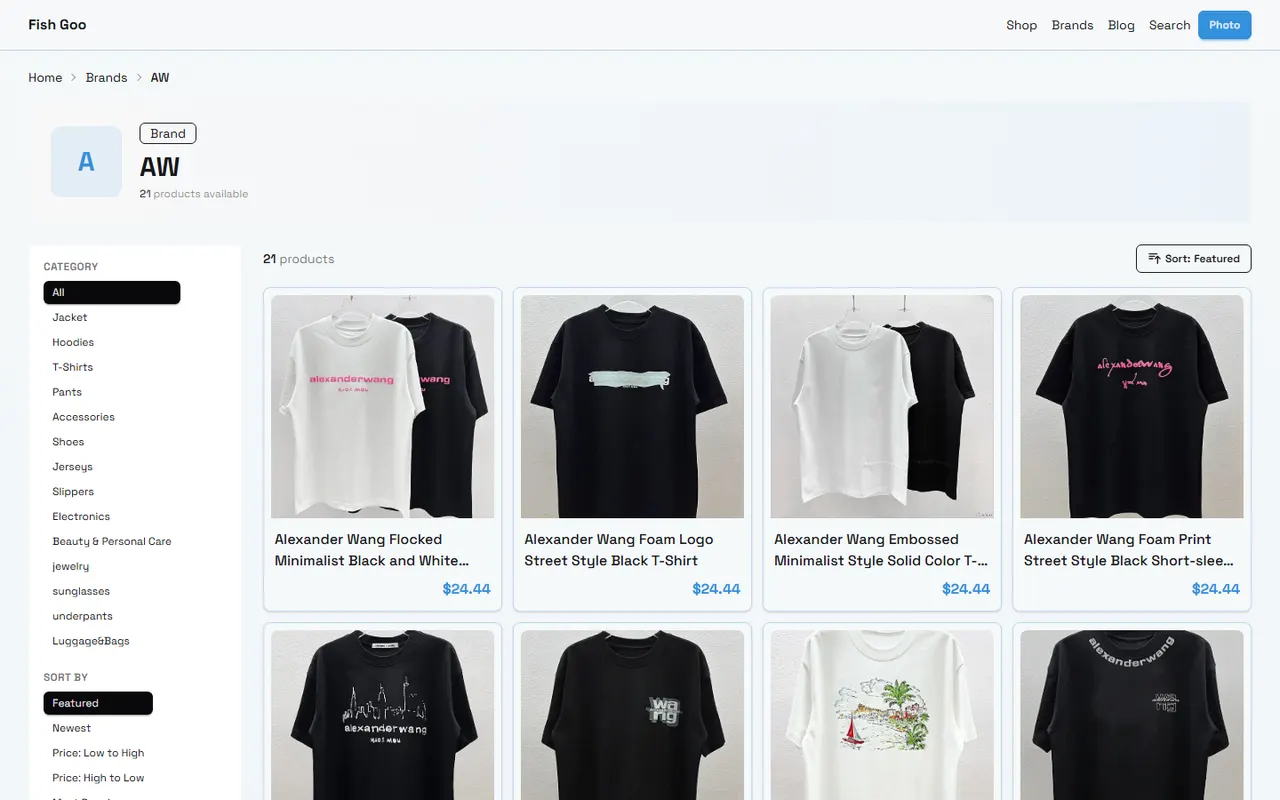
Image: Screenshot of fish-goo.org product catalog page. This image is used to illustrate the platform catalog display environment and does not serve as physical evidence of cufflink hinge, material, size, or closure reliability.
First Distinguish Between Hinge Movement Issues and Cuff Buttonhole Issues
When cufflinks cannot be secured, a common misjudgment is to attribute all problems to the cufflinks themselves. In fact, at least two locations should be checked separately: the cufflink structure and the cuff buttonhole.
If the closure bar is difficult to rotate when not in contact with the cuff, stops halfway, or the unfolding angle differs noticeably each time, the problem is closer to the hinge or connection area. Continuing to force bend at this point may increase the risk of structural damage.
If the cufflink can unfold and close smoothly in the air, but cannot fully rotate back to the locked position after being inserted into the cuff, then you need to check the cuff thickness, hole size, whether the hole edge has a reinforcement layer, and the available space after the closure bar passes through.
Also pay attention to whether the cuff buttonhole is aligned with the cufflink orientation. If the hole is too tight, misaligned, or the two layers of fabric are not aligned, a normally functioning closure structure may appear stuck. 🧵
Functional Division of fishgoo Cufflink Hinge, Closure Bar, and Back Post
Before checking, first understand the tasks of the three components separately:
The hinge is responsible for moving the movable part between unfolded and folded positions.
The closure bar is responsible for passing through the cuff buttonhole and forming a fixed state after rotating back.
The back post or end stop is responsible for limiting the cufflink from slipping out of the buttonhole.
These three components need to form a continuous action, rather than each "looking fine" individually. The hinge being able to move does not mean the closure bar can definitely pass completely through the cuff; the closure bar being able to pass through the cuff does not mean the back post has reached a stable locked position.
On the fish-goo.org product page, before purchasing, you should rely on the current product page's displayed name, images, visible specifications, inventory, and purchase process. If the page does not clearly show the hinge connection, closure bar end, or back post state, you should not infer structural reliability solely from the catalog thumbnail. Platform page information and actual product details need to be verified separately.
Step-by-Step Checking Method for Unfolding, Inserting Through Cuff, and Closing
You can perform a check that does not rely on brute force in the following order:
First observe the initial state of the cufflink when not in contact with the cuff, confirming that the hinge connection has no obvious misalignment, loosening, or abnormal gaps.
Slowly move the movable part and record whether it can rotate smoothly from the folded position to the unfolded position. The motion should be continuous, without sudden sticking or requiring forced bending.
Align the closure bar with the cuff buttonhole, first confirm the bar direction is correct, then try to pass it through the hole. Do not apply lateral pressure when the bar end is already pushing against the fabric.
After the closure bar has completely passed through, slowly rotate it back or adjust it to the locking direction, observing whether the back post is on the outside of the cuff and forms a stop.
After releasing your fingers, observe from the side whether the closure bar remains in the locked position. If slight movement of the cuff causes it to spring back to the open state, discontinue use.
Repeat the same check for the other cufflink, comparing the unfolding angle, hinge resistance, closed position, and back post direction of the two products.
The focus of the check is whether the action is complete, rather than whether the hinge can reach a certain fixed angle not confirmed by the product page. Different structures of cufflinks may have different ranges of motion, and you cannot force the movement method of one design onto all products.
Use Range of Motion and Locking Position to Identify Jamming Risks
Range of motion checks can help distinguish normal damping from true jamming. Normal damping typically appears as continuous motion, the movable part can return to the same position, and there is little difference between the left and right cufflinks. Jamming often appears as a sudden tightening in a small section, inability to complete the motion, or inconsistent stopping positions.
You can use three questions to judge:
Can the hinge complete the full path from folded to unfolded and back to closed position?
Can the closure bar pass through the cuff buttonhole without scraping or pulling the fabric?
After reaching the closed position, does the back post still require continuous finger pressure to remain?
If the answer to the third question is "yes", the current state may just be temporarily positioned and does not form a reliable lock. In this case, it is not recommended to create a fixed effect by increasing fabric thickness, inserting extra material, or forcing compression.
Also pay attention to abnormal wear marks around the hinge, misaligned metal edges, or decorative parts interfering with the movement path. Photos alone cannot confirm internal pins, weld points, or material strength, so these observations can only help decide whether to retake details or postpone use, and cannot replace physical inspection. 🔍
Impact of Thick and Thin Cuffs on Closing Space
Cuff thickness changes the remaining space after the closure bar passes through. Thin cuffs usually make it easier for the closure bar to rotate, but if the hole is too large or the fabric is soft, it may cause noticeable wobble when worn. Thick cuffs may reduce the available movement space for the closure bar, preventing the back post from fully rotating to a stable position.
When judging, do not just compare the number of cuff layers; also observe the following factors:
Whether the two layers of cuff fabric are completely aligned.
Whether the hole has a reinforcement layer or thick binding.
Whether the length and shape of the closure bar will touch the fabric edge.
Whether there is still enough movement allowance after the back post rotates back.
Whether the cufflink is continuously pushed toward the open direction by the fabric after insertion.
If the same cufflink can close on thin fabric but cannot lock on thick fabric, this usually indicates a mismatch between the structure and the current cuff combination, and should not be simply attributed to wearing technique. Conversely, if the closure bar cannot complete the action on both thin and thick cuffs, the cufflink structure itself should be checked first.
Boundary Between Image Evidence and Actual Judgment
Product images can help confirm appearance, number of parts, display orientation, and whether the page provides certain details, but images cannot prove hinge resistance, retention force after closure, material hardness, or durability after long-term wear.
When viewing products on the fish-goo.org page, it is recommended to look for:
Close-up images of the hinge connection.
Comparison images of the closure bar in unfolded and folded states.
Clear images of the back post end.
Product name, specifications, and visible size information.
Whether the current purchase page displays verifiable inventory, price, and ordering steps.
If the page only shows front decorative images without structural details, you can record "insufficient structural information" as an item to confirm before purchase. Do not interpret parts that are unclear in the image as a specific material, and do not write the static posture on the product page as having completed a closure test.
Complete Paired Consistency and Closure Check Before Wearing
Cufflinks usually need to be used in pairs, so you cannot check only one. Paired checks at least include:
Whether the hinge movement directions of the two cufflinks are consistent.
Whether the unfolding amplitudes of the two closure bars are significantly different.
Whether both back posts can reach the corresponding locking positions.
Whether the decorative surface orientations are consistent.
Whether both can complete the closing action when passing through cuffs of the same thickness.
If one is smooth and the other obviously jams, or the two cufflinks have different directions after closing, it is recommended to stop wearing and save clear structural photos. The photos should include close-ups of the hinge, closure bar, and back post, and if necessary, capture the state before inserting into the cuff and after insertion.
When involving orders, shipping labels, or personal information, before taking and submitting photos, cover names, addresses, phone numbers, order numbers, payment information, and other identifiable information. Only keep the areas necessary for judging the structure. 📷
Final Decision: Continue Use, Retake Details, or Replace Structure
Based on the check results, you can make one of three decisions:
Continue use: The hinge action is continuous, the closure bar can pass smoothly through the cuff, the back post remains locked after releasing fingers, and the paired performance is basically consistent.
Retake details: The product page or existing images cannot clearly show the hinge, closure bar, and back post, or the problem only occurs with a specific cuff thickness, requiring more evidence to judge.
Stop use and consult replacement: The hinge repeatedly jams, the closure bar cannot complete the path, the back post cannot maintain lock, or the paired difference is obvious.
The benefit of continuing use is no additional waiting or replacement process costs; the downside is that if the locking state is unstable, the cufflink may fall off during wear, bringing risks of loss and fabric damage. Retaking details can improve subsequent judgment accuracy but cannot fix structural problems. Replacing the structure or product may increase time, communication, and shipping costs, but is more suitable for situations where reliable closure cannot be achieved.
It is not recommended to use methods such as forced bending, adhesive fixing, inserting thick pieces, or self-disassembling the hinge. These practices may alter the original structure and make future after-sales judgment more difficult. The final decision should be based on the current product page's visible information, physical photos, and actual closure performance, rather than using exquisite appearance, promotional words, or a single front image as proof of reliability.
This article is organized based on the fish-goo.org visible catalog environment and cufflink structure checking logic, and does not claim to have personally purchased, received, or tried on fishgoo cufflinks. Page information, prices, inventory, specifications, and purchase conditions should be re-verified before placing an order.
Agent Platform Shopping FAQ
1. Why can't you do without spreadsheets on fish-goo.org?
Most agent platforms do not directly display products on their pages, so you often need to use spreadsheets to search for desired products and get the corresponding purchase links. If you find this method inconvenient, you can also seek help on Reddit or Discord, where recommended products are usually of good quality, but the entire purchase process can be quite slow. These spreadsheets are typically compiled from long-term information collected from these communities.
2. How to judge the quality of a product when shopping through fish-goo.org?
When evaluating product quality, be sure to look at QC photos and not rely solely on factory-provided images, as factory photos are often edited. QC photos can confirm whether the product details meet your specific requirements, helping you decide whether to actually place an order. Also remember that overly cheap products are usually of poor quality and should be avoided.
3. What kinds of products can be found in fish-goo.org's spreadsheets?
fish-goo.org's spreadsheets cover footwear, clothing, bags, accessories, jerseys, perfumes, hats, scarves, belts, and various household items.
4. What exactly are the QC photos mentioned by fish-goo.org?
All dropshipping platforms have dedicated quality control teams. When your product arrives at the platform warehouse, the platform conducts quality checks and takes QC photos. Usually three photos are taken each time, and the team checks whether the color, size, specifications, and quantity of the product match the order, and whether there are quality defects. However, electronic products are excluded; these are only checked for appearance. If quality issues are found, or if the size or color is wrong, the team will immediately request the seller to return the product, ensuring you receive high-quality items.
5. For fish-goo.org users, which platform offers the best coupons?
I recommend Kakobuy because it currently has a $15 discount code with no minimum spending requirement. This offer is very suitable for users ordering small packages. The coupon code is kakobuy888.
Browse our latest products and find your next favorite item.